Today, the number of hellebore species is still debated. The geographical range, or ranges, they cover means they overlap in places. We already know how easy it is to cross hellebores in cultivation, so there is a high probability they are merrily doing this in the wild. There is difficulty in finding where to draw the line between two distinct species or whether hybrids exist in the same area.
But I won’t go any further with that prickly subject (more about that here), I am more interested in how we got to the amazing variation in the hellebores we have today, our garden Helleborus x hybridus.
The name Helleborus x hybridus was first coined around 1894 but was not much used until quite recently, people preferred to call our garden hybrids ‘orientalis hybrids’, which is not the case anymore. Many of the plants available in garden centres now are new hybrids between possibly more than two species, none of them being orientalis.
The first documented named hellebore interspecies cross was in 1931 between H. niger and H. argutifolius. It begat a handful of cultivars but they all had greenish-white flowers. This is named Helleborus x nigercors (H. argutifolius used to be referred to as H. corsicus).
Then came a cross between H. argutifolius and H. lividus, which are in the same classification group. This plant was named Helleborus x sternii, after Frederick Stern, and first exhibited in 1947. It’s still rather a popular garden or pot plant now and has several strains or cultivars. It is not always completely hardy as it does not like wet conditions.
(Image: H. x sternii ‘Ashwood Strain’)
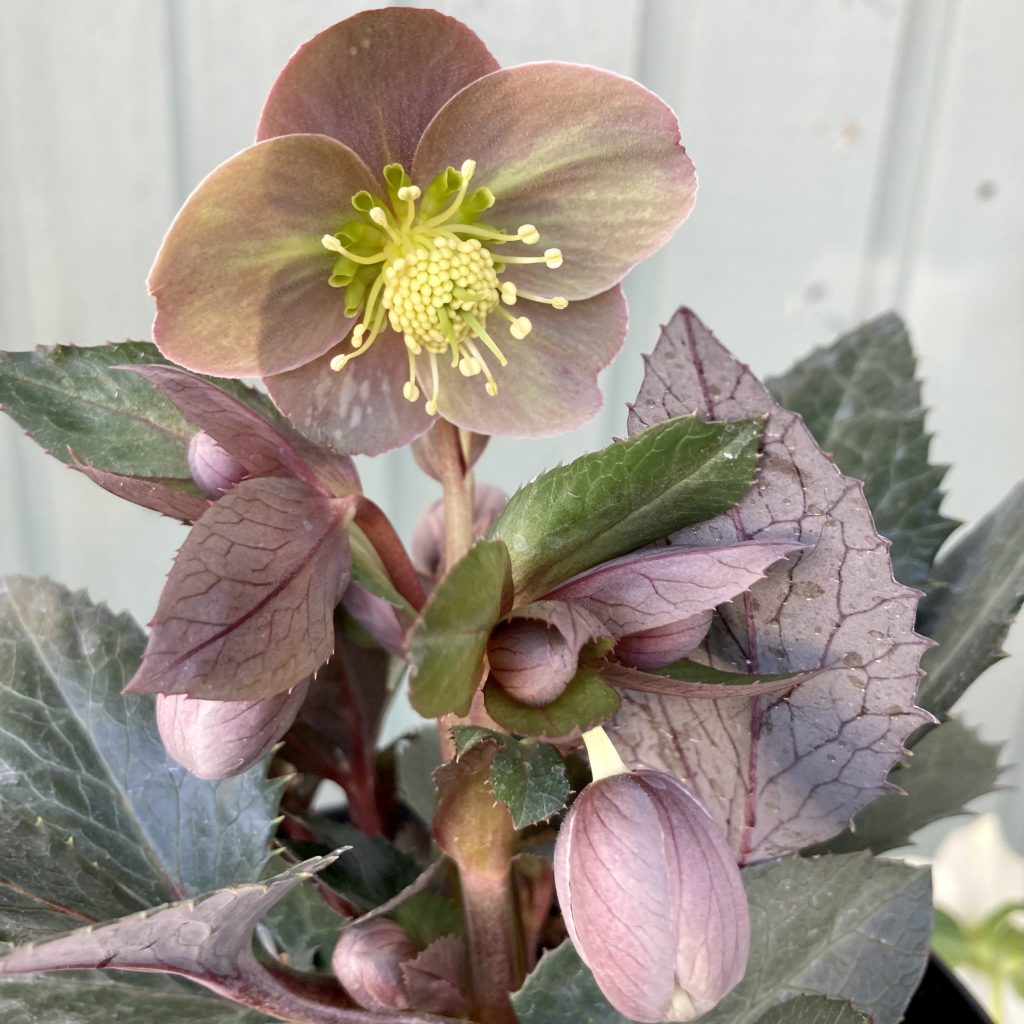
The next interspecies hybrid did not arrive until the early ‘70s, when Helen Ballard crossed H. niger with H. lividus. This was termed Helleborus x ballardiae in her honour. (However she is apparently not the first to produce these plants, Eric Smith crossed them first but Helen Ballard grew many more, carefully selecting particular types).
Helen Ballard exhibited two plants at the RHS in 1973, called ‘December Dawn’ and ‘Midwinter’, and had another cultivar called ‘Pink Frost’ (not the same as the one currently marketed by HGC). The cross was thought to be not quite so hardy, inheriting this weakness from its H. lividus parent. Now, several varieties are available of this interspecies hybrid, including ‘Maestro’, ‘Camelot’, ‘Merlin’ and ‘Cinnamon Snow’ (from the producers of the Helleborus Gold Collection or HGC).
At the same time, Eric Smith produced a new hybrid between H. x sternii and H. niger, later named Helleborus x ericsmithii. Hardier than x sternii, there are several cultivars available today.
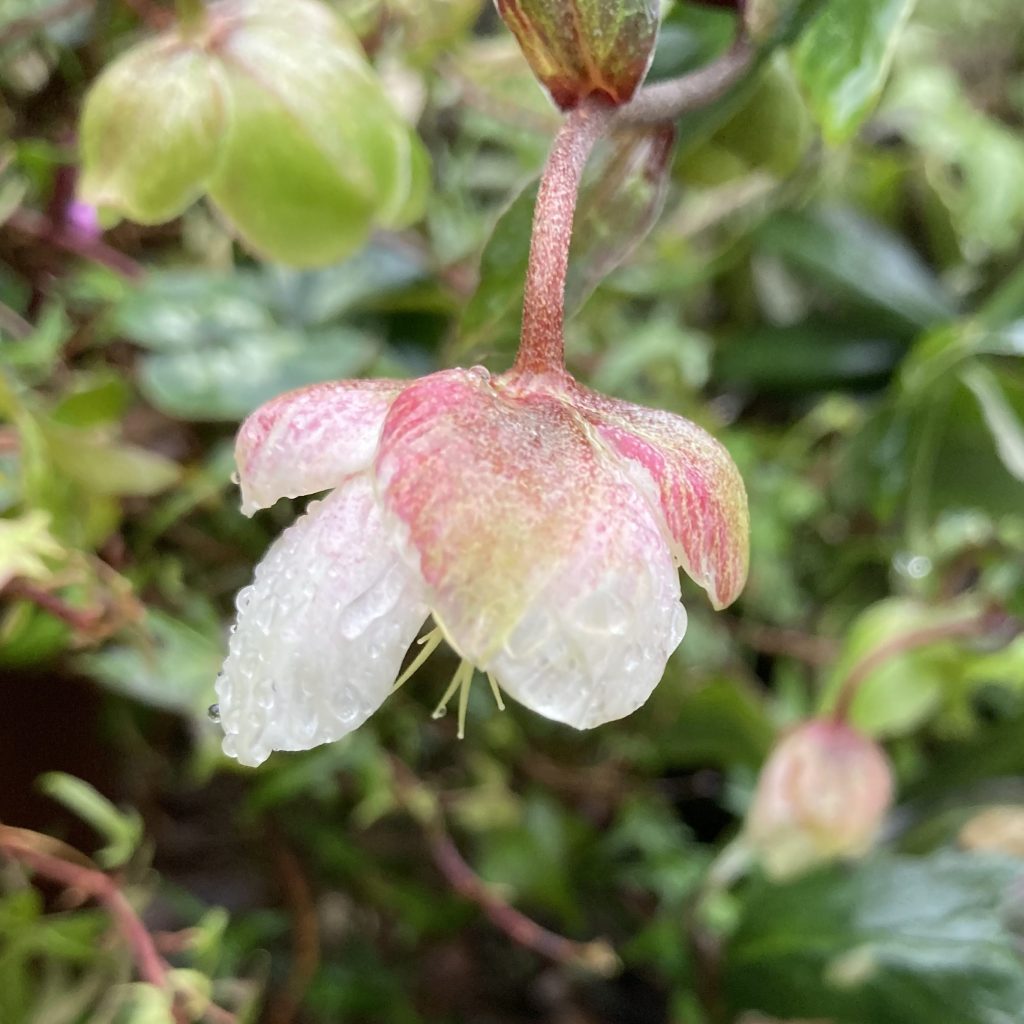
Further interspecies crosses have been carried out more recently, such as H. niger and H. foetidus which is named Helleborus x sahinii (its foetidus parent may explain why the plant is not very long lived). The variety ‘Winterbells’ is shown here. I also have ‘Dacaya’ which is rather an incredible red.
Another large group available in every garden centre now is H. x glandorfensis, which is H. niger crossed with H. x hybridus. See the HGC website for the ‘Ice and Roses’ collection.
(Image: HGC Ice N Roses Red)

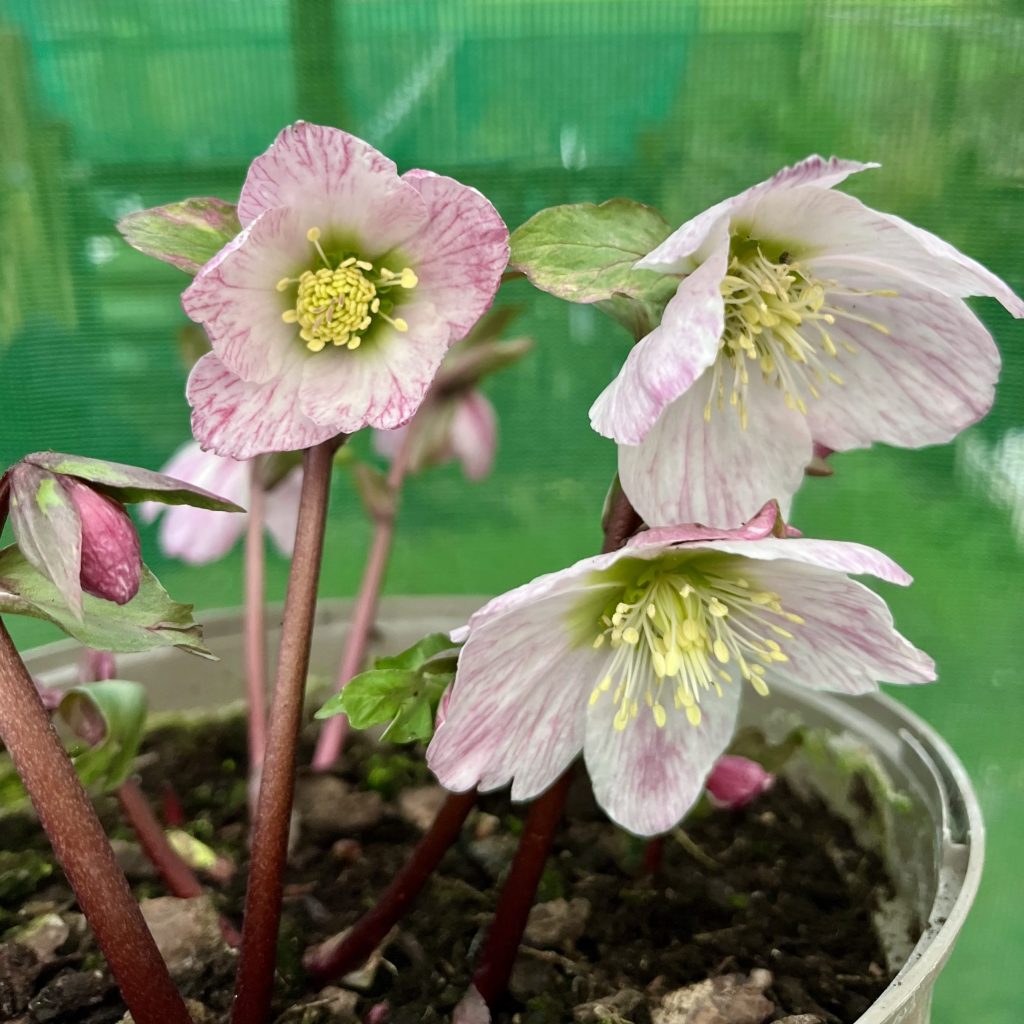
There are hybrids for the specialist, such as H x belcherii, named ‘Pink Ice’ (shown left), a cross between H. thibetanus and H. niger. Also H. x ashwoodiensis ‘Briar Rose’, an interesting cross between H. niger and the very different H. vesicarius. Both of these have been produced at Ashwood Nurseries.
So now we move on to the ‘orientalis hybrids’. There are a handful of original stand-out breeders in the UK, well known for producing more vibrant, better quality and distinctive hybrid hellebores. Breeders such as Elizabeth Strangman in Sussex, Helen Ballard in Kent, Robin and Sue White in Hampshire, Eric Smith in Dorset, Rodney Davey in Devon. They span slightly different time scales but have been developing H. x hybridus since the 1960s.
Some of their breeding has been documented, such as the use of a particularly yellow strain of H. odorus by one breeder and H. cyclophyllus by another, crossing with H. orientalis and x hybridus to develop yellow colouring. In recent years Kevin Belcher at Ashwood Nurseries has taken this yellow and improved it beyond all recognition in the Ashwood Evolution hybrids.
H. torquatus has been used to produce dark colours, veining and double flowers, the latter from a group Elizabeth Strangman found in the wild. It also can have dark nectaries and bronze young foliage. H. atrorubens may well have been used to add red. H. orientalis subsp. guttatus is spotted.
Most of these breeders chose to name particularly good clones, but there is little point as plants rarely come true from seed. It is possible to produce very similar plants by self-crossing, but not in the quantities required to sell it as a variety. However, a small number were developed as strains, such as Queen of the Night strain (which, according to a label found, is growing in my garden when we moved here). These are similar, but if inferior seedlings appear, they should not be passed on as of the original strain.
In the 90s, Harvington Hellebores took shape and started breeding hellebores. They have produced some distinctive H. x hybridus plants and have chosen to name some, such as ‘Double Chocolate’. This is a very dark purple double with dark leaves and tiny flowers not much more than an inch across, the H. torquatus influence is clear. They also have a soft pink hybrid between H. x hybridus and H. niger called ‘Harvington Rebekah’.
As of 2024, there are newer hellebore breeders in the UK. Ashwood Nurseries in particular are producing a stunning range of strong colours on vigorous plants, a result of their breeding programme starting in the late 1980s.
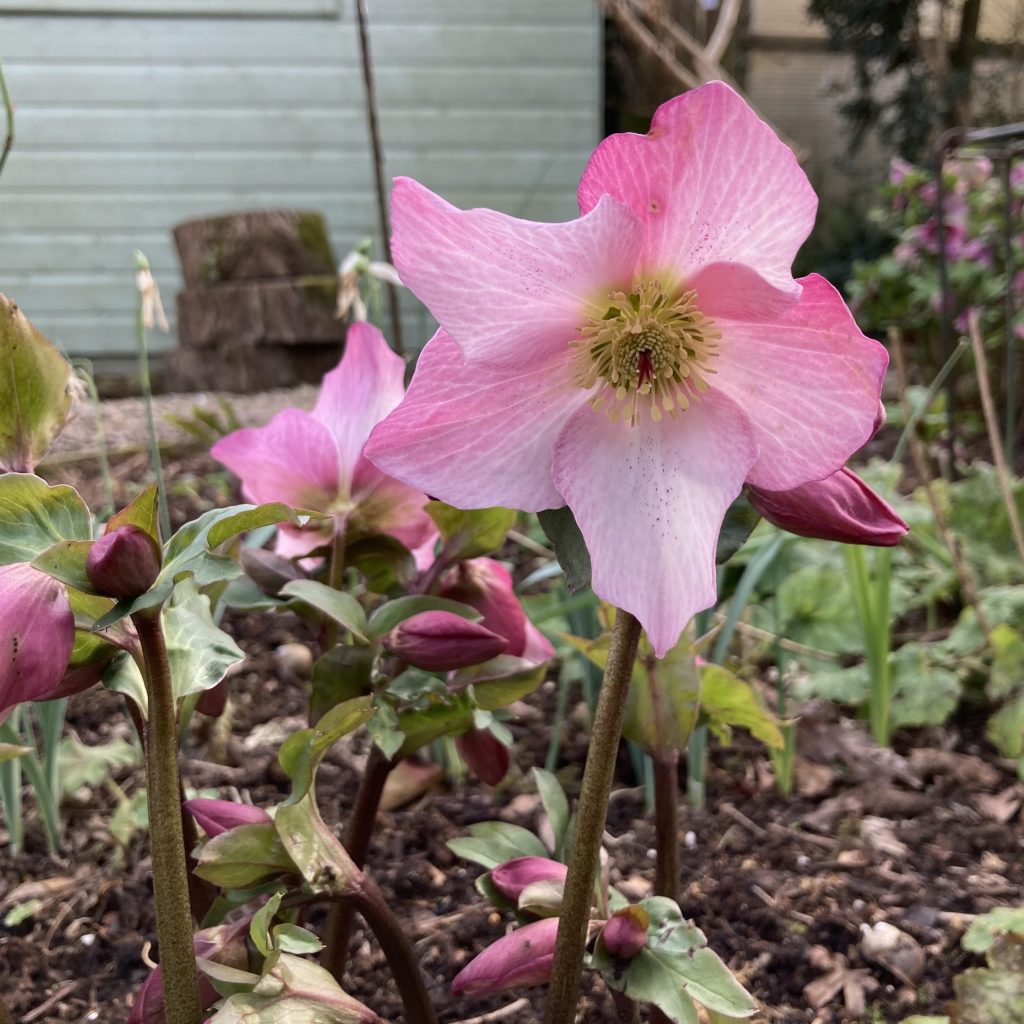
Another H. niger cross with H. x hybridus is ‘Walberton’s Rosemary’, developed in Devon, which has very large, outward facing flowers. I’ve found that a disadvantage this winter (2024) as it had been so incredibly wet that some of the flowers have rotted. Those with more downward-facing flowers have been reasonably OK.
Other nurseries raising hellebores include Farmyard Nurseries in Wales and Hertfordshire Hellebores, although I am not sure if they have specific breeding programmes. Further afield there are nurseries in France such as Barnhaven and Delabroye, both breeding stunning ranges of hellebores. Japan, Germany and the USA also have breeders making large advances. However, in Japan they appear to be doing so by irradiating seed rather than breeding.
If you’d like to read even more, as I am no expert and this is only a brief history, sadly there are very few books that really cover the subject. One is called ‘The Gardener’s Guide to Growing Hellebores’, published in 1993 by Elizabeth Strangman and Graham Rice. Another is ‘Helen Ballard, the hellebore queen’ and is a collection of her notes. It’s probably about time one of the more recent breeders wrote an up to date book!